
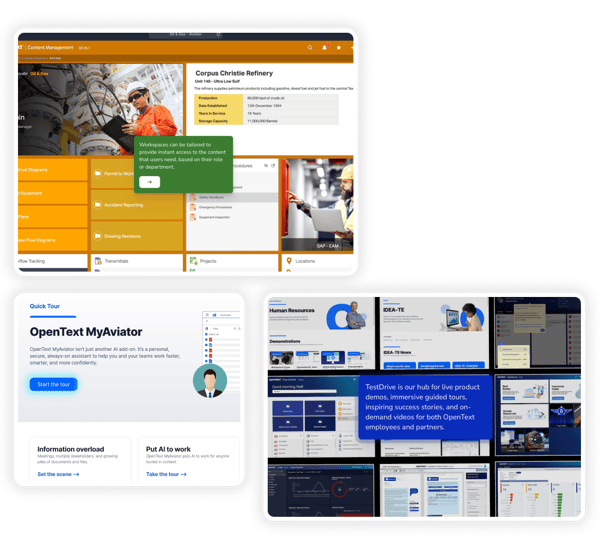




It's built for B2B software companies with roughly 20 to 250 people, several products or personas, and deals that take months and involve a committee. If one demo covers everything you sell, you don't need this yet.
You used to have just one demo
When you had one product, one good demo covered it. Somebody built it, everybody used it, and when it went out of date somebody rebuilt it.
Then you your software portfolio grew
You added more features, created more products, targeted new personas, and a second market.
Now you've got demos scattered across your website, your shared drives, three pre-sales laptops and a video sharing tool a sales guy subscribed to in 2022.
Marketing made some. Product marketing made some. Pre-sales made their own because the others didn't fit.
Nothing looks broken. You've got people making demos But that isn't the same as running them.
The question is, who owns what?
Demos stop working because five teams touch them, but none of them owns them all.
-
Marketing owns the demos that introduce and explain
-
Product marketing owns the demos that carry the use case
-
Pre-sales and sales own the deal-stage demos
-
Support owns the demos that onboard
Nobody loses their demos and nothing gets reorganised.
The place it usually goes wrong is the handover between product marketing and pre-sales, where a buyer who's been working things out alone turns into a live conversation.
Most companies assume that handover. Very few have defined it.

The Demo Distillery
Six things every demo portfolio has to get right
They're not a sequence, they hold each other up, and a weakest one drags the rest down.
The process story
Every demo you own tells the same story, so your buyer hears one version of what you do rather than five.
The buyer experience
A buyer can reach the right demo without booking a call — on your site, in a shared library, in a portal built for their deal.
The demand engine
Your demos start conversations and tell you who's serious, instead of sitting behind a form waiting to be requested.
The sales process
There's a demo ready for every stage of how you actually sell, matched to the buyer's moment rather than to whatever exists.
The revenue backbone
You can see which demos moved deals and which ones cost you, because engagement lands on the deal record.
The operating rhythm
You know what's getting built next and why, and so does everyone who asked for something.
See how strong your portfolio is. A short health check scores you against all six.
Jaw-dropping product demonstrations
"Demodia created a set of tools and scripts that enabled our global sales organisation to consistently deliver compelling product demonstrations."
Anik Ganguly
EVP Products - OpenText
EVP Products - OpenText