
Getting started with HubSpot feels harder than it should
Pipelines, lifecycle stages, properties, and automations all require decisions about how revenue should flow. When your go-to-market isn’t yet clear, every option feels risky and every choice feels premature.
That usually shows up as:
- uncertainty about where to start
- hesitation around early setup decisions
- defaulting to “safe” configurations
- progress slowing before momentum builds
HubSpot isn’t hard to use; it’s hard to orient without a clear model to work from.

Implementation isn’t setup, it’s system design
Most implementations start inside the tool. Pipelines are created, properties are added, and automation is switched on, before there’s agreement on how buyers actually move forward.
When the go-to-market system isn’t designed first, HubSpot has nothing solid to reflect. The platform ends up capturing activity, not guiding behaviour.
Implementation works when HubSpot is built after the system is defined, not used to figure it out along the way.
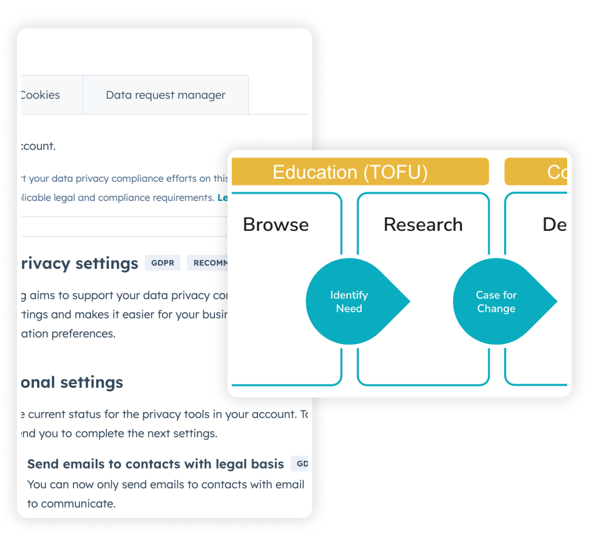
We shape the system before we implement the tool
Before anything is configured, we work through how your go-to-market system actually needs to function, where buyers enter, how progress is recognised, and what decisions the system must support.
That often means refining the system itself so it can be supported properly by HubSpot.
In practice, that looks like:
- clarifying what meaningful progress really is
- simplifying stages so they can be used consistently
- removing ideas that sound right but don’t operationalise
- agreeing definitions teams can actually work with
Only then do we implement HubSpot to reflect that refined model, so the system and the tool reinforce each other from day one.
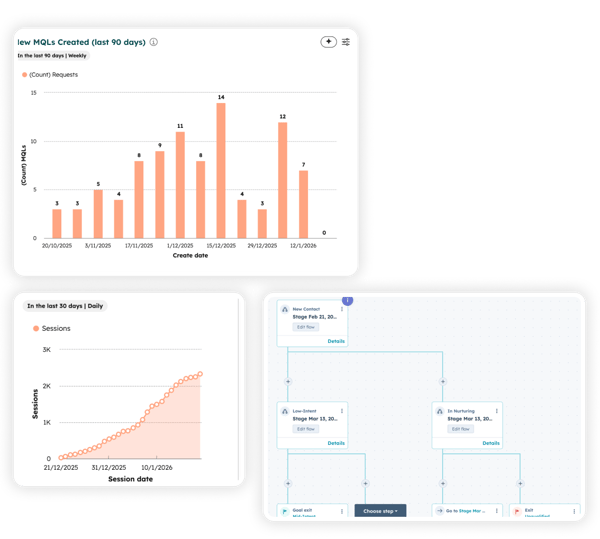
Implementation isn’t setup, it’s system design
Most implementations start inside the tool. Pipelines are created, properties are added, and automation is switched on, before there’s agreement on how buyers actually move forward.
When the go-to-market system isn’t designed first, HubSpot has nothing solid to reflect. The platform ends up capturing activity, not guiding behaviour.
Implementation works when HubSpot is built after the system is defined, not used to figure it out along the way.

This is where the system comes to life

In the Revenue Factory, HubSpot implementation is the point where the go-to-market system stops being conceptual and starts operating day to day. It’s where messaging, sales conversations, demand activity, and reporting are given a shared structure teams can actually use.
That’s why this work doesn’t sit in isolation. It’s the foundation other parts of the system rely on, from sales enablement and demos to RevOps and performance tracking.