
Demo Storytelling

Accurate demos your buyers actually remember

We rework your demo narrative around what's at stake, so buyers can recall them after you've left.
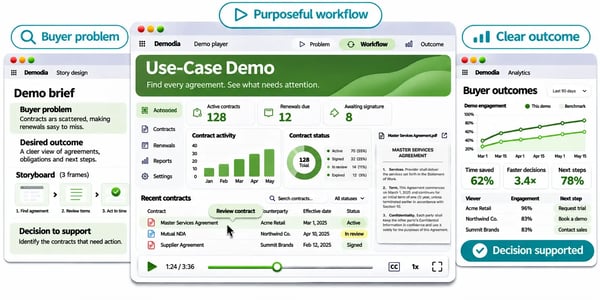
use-case-demo-banner
Buyers who remember you
Champions who retell it
Less confused buyers
Sound familiar?

Every feature shown. Nothing remembered.

Your demos are polished, but your buyers still can't say why they matter.
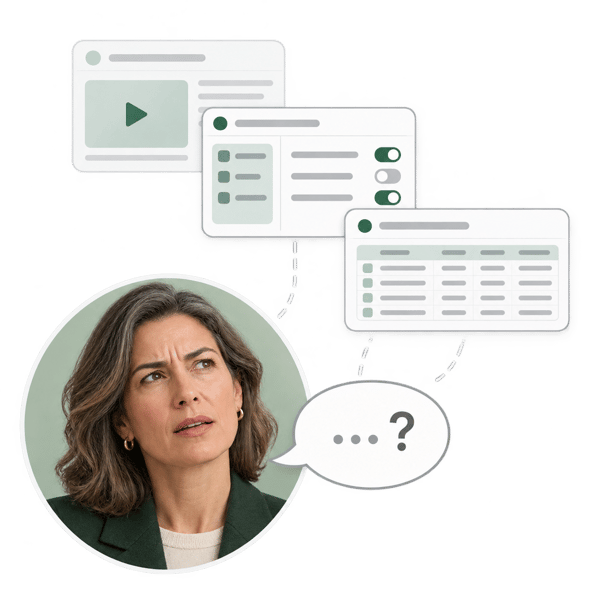
A buyer clicks through one of your demos one morning.

Every screen is polished and every feature is covered. Yet, the next day when her boss asks what your product does, she just says, "It's quite good at reporting."

That's all of it that survived.

  • Demos that follow your menus
  • On-screen notes describing features
  • "Company X" in your demo data
  • Teams telling different stories

Each of these quietly costs you deals.
Where it starts

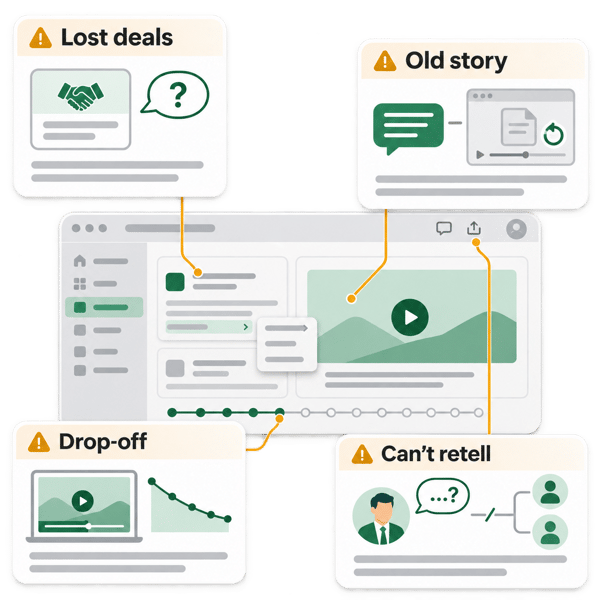
Four signs your demos are falling flat

Most teams spot one of these during a weekly pipeline review.
Lost deals

The weekly deal review

"They didn't get it" keeps coming up as the reason deals went nowhere, and nobody's sure what "it" was.
New positioning

A new message

Your positioning changed last quarter. But, your demos still tell the old story, screen-by-screen, to everyone that watches.
Drop-off

Buyers stop watching early

People start your online demos and slowly drift off halfway through, with no obvious fault in how they were built.
Retelling

Champions can't explain it

Your champion liked your demos, but can't explain them to colleagues. Your deals wait for meetings that never materialise.
The real gap

Your buyer thinks in problems

A feature only matters once your buyer sees what it fixes.

Plenty of demos start at the login screen and work through each feature. But your buyer thinks about the report that takes them all Friday afternoon to generate. 

Ask yourself this: what makes your buyer stressed each month until their problem is fixed? Your demos should show them that.

  • The problem your buyer lives with
  • What it costs them each month
  • The moment your product changes that
  • Their week afterwards

Same product, same screens. A different reason to care.

Start with a 45 minute call

step 1

Book a demo health check

45 minutes to look over your existing demos, and where buyers lose interest.
step 2

We rework two or three demos

Your most important demos, rebuilt around what's at stake.
step 3

Your team
takes over

With our method, our examples and our feedback, you build your storytelling demos.
Next step

See where your demos stand

A 45-minute working session on your existing demos.
  • Which demos buyers drop out of
  • Where your story gets lost
  • Which two or three to rework first
  • What your team can fix alone

No deck, no pitch. Just a working call to see if there's a fit.